Runaway Boy 2: Horror Escape
SprigameAdventure
3.013.00 Reviews
- Version
- 0.3.6
- Installs
- 5.00M
- Age Rating
- Everyone
Screenshots
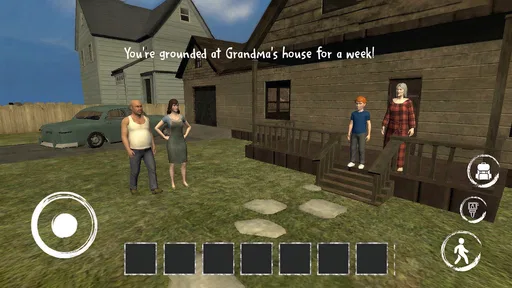
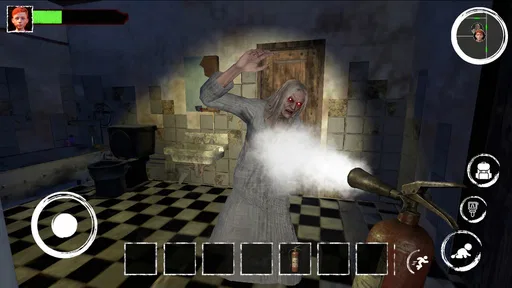
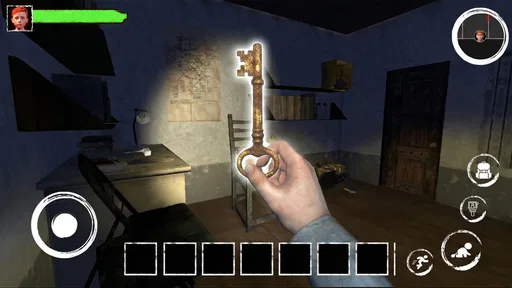
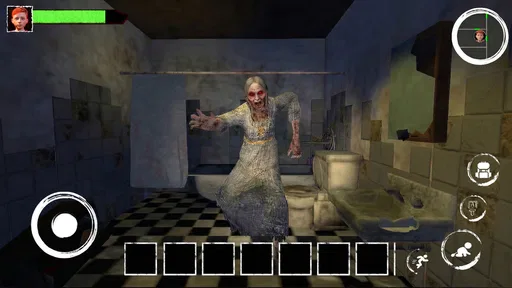
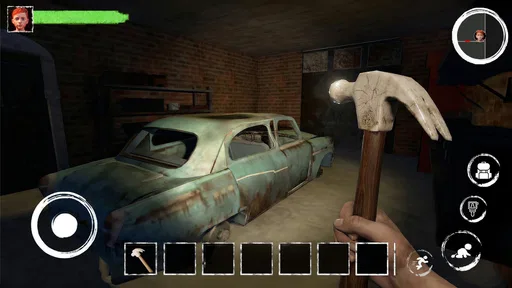
Our Review of Runaway Boy 2: Horror Escape
 Analysis by Appyee
Runaway Boy 2: Horror Escape is a free adventure game from Sprigame that puts a simple question in front of you: can you get out of a frightening mansion before its threatening granny catches you? I approached it as a short, tense escape experience rather than a deep role-playing game, and that distinction matters. The appeal is immediate, but the value depends heavily on how much you enjoy repeating dangerous routes, learning a hostile environment, and staying patient when a mistake sends you back into trouble.
The game is aimed at a broad audience, with an Everyone age rating, although the horror presentation may still feel more suitable for players who are comfortable with suspense. It has passed one million installs, so it is not an obscure experiment with no audience at all. At the same time, its average rating sits at 3.1 from roughly 923 ratings, which tells me to recommend it with some caution rather than present it as a polished must-play. I see a game with a recognizable survival-horror setup, a low barrier to entry, and enough uncertainty around the moment-to-moment experience that expectations should stay realistic.
What the mansion escape feels like in practice
The strongest part of the concept is the pressure created by being chased inside a dangerous house. A mansion is naturally useful for this kind of game because every corridor can become a risk, every room can feel like a possible hiding place, and the route to freedom can seem less obvious than it first appears. The store summary focuses on escaping, outsmarting the granny, and surviving, and that gives the experience a clear purpose instead of burying the player under a long story.
That clarity makes the game easy to understand when I recommend it to someone who wants a quick horror challenge. You do not need to learn a large fantasy world or manage a complicated character build before the tension begins. The central loop is about movement, awareness, and making better decisions after each failed attempt. For me, that kind of structure works best when I play in short sessions, because the suspense remains sharp and the repeated attempts feel like investigation rather than routine grinding.
A realistic use case would be playing with headphones during a quiet evening, starting with the goal of learning the mansion rather than escaping immediately. On the first attempt, I would pay attention to where danger seems to interrupt progress, which rooms are easy to confuse, and whether rushing creates more problems than it solves. On the next attempt, I would change one decision at a time. That approach turns failure into useful information and prevents the game from becoming an aimless sequence of panic and restarts.
The most important skill here is controlled attention, not speed alone. Players who sprint through every unfamiliar space may create their own problems. A slower approach lets you remember the layout and recognize which choices deserve caution. Even without treating the game like a serious puzzle competition, it helps to mentally divide the mansion into small zones. Learn one section, then connect it to the next. This is a more reliable method than trying to memorize the entire escape route in one sitting.
Why repeated attempts can work
Escape-horror games often live or die by the quality of their repetition. If every attempt teaches me something, a capture can feel fair. If nothing changes except the result, the same capture quickly feels pointless. In this game, I would judge each failure by asking whether I now understand a route, a timing problem, or a risky decision better than before. That mindset is especially useful because the title is built around surviving an antagonist rather than simply walking through a linear adventure.
There is also a psychological trade-off. The first encounter with a threatening pursuer usually carries the most surprise. Later attempts replace surprise with planning, which can make the game less frightening but more satisfying for players who enjoy mastery. Someone looking for a single dramatic horror story may prefer a more cinematic alternative. Someone who likes learning through mistakes may get more from this format, even if the presentation is less elaborate than a larger console-style horror game.
I would not choose this as my first recommendation for a player who dislikes being caught, retracing progress, or testing the same area several times. The game’s basic premise naturally creates pressure, and pressure is not enjoyable for everyone. It is better suited to people who see a failed run as a clue. If you want a calm exploration game with no pursuit, this is probably the wrong direction.
Progress, pressure, and the cost of impatience
The progression in a game like this is mainly personal knowledge: I become better at reading danger, remembering spaces, and choosing when to move. That can be rewarding because improvement comes from my decisions rather than from collecting a stronger weapon or building a more powerful character. It also means the experience may feel demanding if I expect obvious upgrades or a long list of unlockable abilities.
One useful habit is to change only one part of a failed attempt. If I alter the route, the pace, and the timing all at once, I cannot tell which decision helped. Instead, I would keep a successful early section consistent and experiment only at the point where the run breaks down. This small workflow makes the game feel more like solving an escape problem and less like hoping for a lucky passage.
Another practical tip is to stop after a frustrating series of failures rather than forcing one more attempt indefinitely. Horror depends on concentration, and tired players make louder, faster, less careful decisions. A short break can be more valuable than continuing while annoyed. This is not a feature claim about the game; it is simply the best way I found to protect the part of the experience that makes the mansion tense instead of exhausting.
The current version is 0.3.2, which is worth keeping in mind when deciding how much polish and content to expect. A version number alone does not tell me whether a particular device will run the game smoothly or whether every player will enjoy its balance, so I would treat the experience as something to try rather than a guaranteed premium-quality production. The minimum operating system is Android 7.1, making the compatibility requirement relatively approachable for many Android users.
Spending and what can be judged fairly
The game is free to start, and in-app purchases are listed at $2.99 per item. That makes the initial decision straightforward: I can install it without paying upfront and decide whether the escape loop suits me. The purchase price gives a clear reference point, but it does not tell me what each item does, how necessary any purchase is, or whether spending changes the balance of a particular run. I would not assume that paid items are essential, optional, cosmetic, or progression-related without seeing that information directly in the game.
For that reason, my spending rule would be simple: play first, understand the role of an item, and only then decide whether it solves a problem I actually have. A low individual price can still become poor value if I keep buying things to compensate for impatience. Conversely, a purchase may feel reasonable to a player who has already enjoyed the free experience and wants to support continued play. The fair conclusion is not that the monetization is good or bad in every case; it is that the listed price is clear while the practical value depends on what appears during play.
This also affects how I compare the game with alternatives. A paid horror game with a single upfront cost may offer a more predictable budget, while another free escape game may use a different purchase structure. Here, the entry cost is friendly, but the total value cannot be judged from the item price alone. Players who want complete certainty about their final spending should be more comfortable with a one-time purchase model elsewhere.
Is the experience competitive or pay-to-win?
There is no reason to treat this as a competitive multiplayer product based on its positioning as an adventure escape game. The meaningful comparison is therefore not whether one player can buy an advantage over another, but whether spending undermines the personal challenge of escaping. Since the listed information identifies purchases without explaining their contents, I would avoid calling the game pay-to-win or claiming that it is perfectly fair. Those labels require details about what the items provide.
From a player’s perspective, the fairest way to approach it is to set a personal boundary before opening the purchase screen. I would first attempt the mansion without spending, then decide whether I am enjoying the core challenge. If a paid item appears to remove the exact decision-making that makes the escape satisfying, I would skip it. If it merely improves convenience without replacing the challenge, some players may consider that acceptable. The right choice depends on whether you play for mastery or simply want a smoother route through the scenario.
This is also where the game differs from action-heavy adventure titles. There is no need to compare damage values, ranked performance, or team roles when the main attraction is surviving a threatening environment. The trade-off is that personal fairness becomes subjective. One player may welcome help after repeated failures; another may feel that any assistance weakens the horror. I would keep the first few sessions purchase-free so I could understand which side of that divide I occupy.
What remains uncertain before installing
The rating of 3.1 from around 923 ratings is a useful warning sign, but it is not a full explanation of the game’s weaknesses. It may reflect different devices, different expectations, or different reactions to the horror format. I would read it as a reason to keep expectations moderate, not as proof that the game is unplayable. The game has also accumulated over one million installs, so there is clearly enough interest for people to try the concept.
There are several questions I would personally answer through the first session. Does the chase feel readable rather than random? Are the mansion’s spaces distinct enough to remember? Does failure teach me something, or does it mainly force repetition? Do the controls let me react quickly without feeling slippery? These are more important to my decision than the premise alone. A horror game can have a strong setup and still lose me if movement or enemy behavior makes every failure feel arbitrary.
I would also check how the game behaves on my particular phone before committing time to it. The broad operating-system requirement is encouraging, but compatibility is not the same as identical performance on every device. If the game feels uncomfortable to control, I would not spend money trying to overcome that problem. A purchase should add value to an enjoyable experience, not persuade me to tolerate basic friction.
The Everyone rating makes the game easier to consider for households that prefer broadly accessible content, but parents should still use their own judgment about whether a child enjoys horror tension. Age labels are helpful starting points, yet a threatening pursuer and a trapped-mansion scenario can unsettle some younger players even when the formal rating is broad. I would introduce it to a child only if that style of suspense already fits their comfort level.
Who should try it, and who should skip it
I would recommend this adventure to players who enjoy compact survival challenges, learning a map through repetition, and the satisfaction of escaping after several failed attempts. It is also a sensible choice for someone who wants a free entry point into horror games without first buying a large, story-heavy production. The clear objective makes it approachable, while the pursuit setup gives ordinary movement a sense of consequence.
I would be more cautious with players who want a richly explained narrative, extensive character development, or a guaranteed polished experience. The early version status and middling average rating make it difficult to promise the refinement of a major horror release. Players who dislike in-app purchases should also decide in advance whether they are comfortable ignoring optional spending opportunities, because the game does list items at $2.99 each.
Compared with a traditional adventure game, this title puts more weight on immediate danger and less on leisurely discovery. Compared with a large survival-horror game, it is easier to approach but likely offers a narrower kind of engagement: escape, pressure, learning, and survival. Compared with a fully paid alternative, the free starting point is its clearest advantage, while budget certainty may favor the paid option. Those differences make the choice fairly simple once I know what kind of evening I want.
My trust verdict after weighing the trade-offs
My recommendation is measured rather than enthusiastic. Runaway Boy 2: Horror Escape has a focused premise that can work well in short sessions, especially when I treat the mansion as a problem to learn instead of a place to rush through. Sprigame has made a free adventure with an accessible operating-system requirement and a clear horror objective. The fact that it has attracted more than one million installs shows that the format has found an audience.
Still, I would install it with realistic expectations. The average rating of 3.1 suggests that the experience is not universally satisfying, and the current version indicates a project that may still feel less settled than a mature release. I would not spend immediately, and I would not describe the purchase system as either unfair or harmless without knowing what each item changes. The sensible path is to test the free experience, observe how fair the pursuit feels, and decide based on your own tolerance for repetition.
In the end, I think this is worth trying for a patient horror fan who enjoys escaping by learning from mistakes. It is not my pick for someone seeking a complete, story-led thriller or a no-pressure exploration game. Try the free core first, keep your spending deliberate, and judge the game by whether each failure teaches you a better way through the mansion. That is the fairest way to discover whether this small adventure earns a place on your phone.
Privacy and Permissions
See what permissions an app requests and how it handles your data.
- Wi-Fi connection information
- view Wi-Fi connections
- Other
- view network connections, full network access, control vibration, prevent device from sleeping, Google Play license check
Verdict
Strengths of Runaway Boy 2: Horror Escape
- Simple controls make it easy to start playing quickly.
- Short escape sequences suit casual gaming sessions.
- Dark environments create a tense horror atmosphere.
- Exploration rewards players who pay attention to details.
- Runs well on many modern Android and iOS devices.
Limitations of Runaway Boy 2: Horror Escape
- Some puzzles may feel unclear without trial and error.
- Horror effects can become repetitive during longer sessions.
- Limited story depth may disappoint players seeking more lore.
- Progress can feel slow when objectives are not obvious.
- Ads or in-app purchases may interrupt the gameplay experience.
Similar Picks in This Category
View All
Roblox
Roblox Corporation4.2

Pokémon GO
Niantic, Inc.3.5

Ninja warrior: legend of adven
TOH Games4.6

Ninja Arashi
Black Panther4.6

Eyes - The Horror Game
Fearless Games sp. j.4.5

Critical Action:Gun Strike Ops
FPS Shooter & Action Game4.3
Frequently Asked Questions
What is Runaway Boy 2: Horror Escape about?
Runaway Boy 2: Horror Escape is a horror-themed escape game focused on exploration, stealth, and puzzle solving. You guide the main character through dangerous locations while trying to uncover clues, avoid frightening enemies, and find a way out. The game combines suspenseful moments with simple adventure mechanics, making it suitable for players who enjoy short, story-driven horror challenges on mobile devices.
How do you play Runaway Boy 2: Horror Escape?
Gameplay mainly involves exploring the environment, searching for useful objects, solving puzzles, and hiding or escaping when danger appears. Players need to pay attention to sounds, visual clues, locked areas, and changes in the surroundings. Progress usually depends on understanding the level layout and using collected items correctly, so rushing forward without investigating can make certain sections more difficult.
Is Runaway Boy 2: Horror Escape suitable for children?
Although the game may use cartoon-style graphics, it is designed around horror, suspense, pursuit sequences, and unexpected scares. Some scenes, sounds, or enemy encounters may be unsettling for younger players or people who are sensitive to frightening content. Parents should check the store rating, screenshots, and content information before allowing children to download it, especially if they dislike dark or tense games.
Does Runaway Boy 2: Horror Escape require an internet connection?
The core experience appears to be designed as a single-player adventure, so many parts may be playable without a continuous internet connection after installation. However, connection requirements can vary depending on the version, advertisements, updates, analytics, or optional features included by the developer. It is best to launch the game once while online and review its permissions and in-game notices.
Is Runaway Boy 2: Horror Escape free to download?
Runaway Boy 2: Horror Escape may be available as a free download, but availability, advertising, and optional purchases can differ between Android and iOS versions or change after updates. Before installing, check the official store listing for the current price, in-app purchase details, required storage, age rating, and supported devices. Downloading from an official store is also safer than using unofficial APK websites.
Play our best games!


